You apply sunscreen, look in the mirror, and a grey ghost stares back. In flash photos it gets worse: an ashy film floating over your actual skin tone. So you quietly stop wearing it, and the dark spots you were trying to prevent keep getting darker. This guide fixes that. We compared the filters, finishes, and real user reports behind seven sunscreens that genuinely disappear on brown and South Asian skin, all of them available in Pakistan, from a Rs 500 pharmacy tube to the Korean favourite everyone talks about.
Quick comparison
| Sunscreen | Type | SPF / PA | Finish | Price (PKR) | Best for |
| Beauty of Joseon Relief Sun | Chemical | SPF 50+ PA++++ | Dewy, invisible | 3,500 to 4,000 | Overall winner |
| Skin Aqua Clear White | Chemical | SPF 50+ PA+++ | Featherlight | 1,800 to 2,400 | Best value |
| Isntree Hyaluronic Watery Sun Gel | Chemical | SPF 50+ PA++++ | Watery, hydrating | 2,800 to 3,000 | Dry skin |
| Neutrogena Hydro Boost Water Gel | Chemical | SPF 50 | Gel, moisturising | 2,800 to 3,800 | Easy availability |
| Jenpharm Spectra Block Max | Tinted mineral | SPF 100 | Tinted, natural | 1,000 to 1,200 | Pharmacy pick, melasma-prone |
| CeraVe Hydrating Mineral | Micronised mineral | SPF 50 | Creamy | 3,200 to 4,500 | Sensitive skin needing mineral |
| U-Veil Forte | Hybrid | SPF 60 | Light lotion | 500 to 700 | Tightest budgets |
Why sunscreen turns brown skin grey
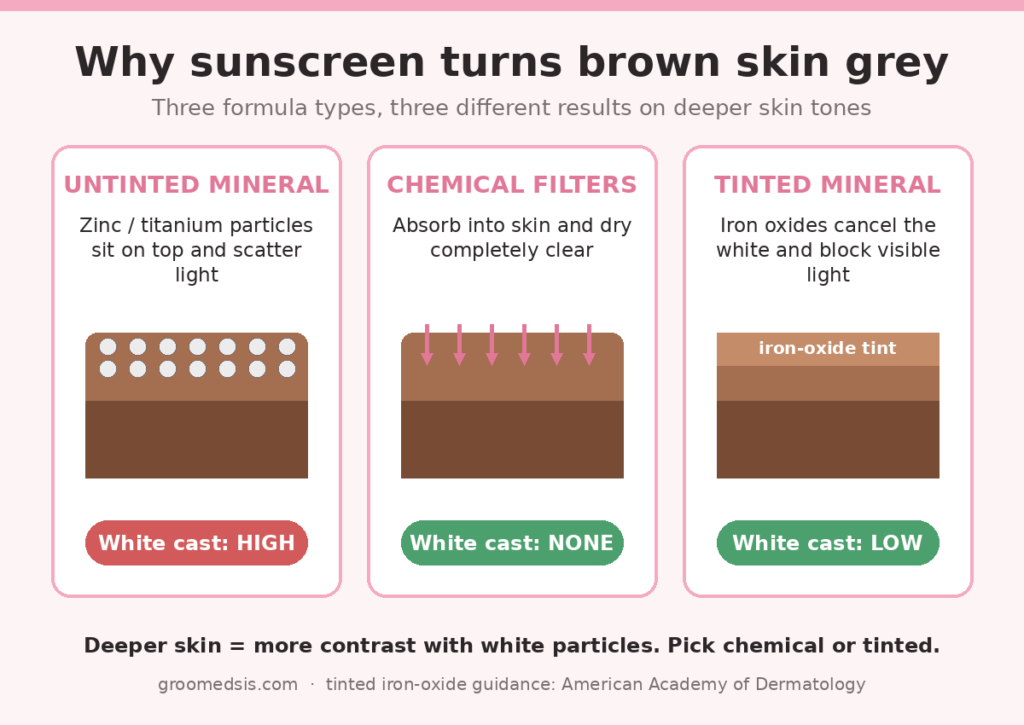
White cast is not your imagination and it is not bad application. Classic mineral filters, zinc oxide and titanium dioxide, work by sitting on the skin and scattering light. Those white particles are barely visible on fair skin. On medium and deep skin, the contrast is obvious, and the deeper your tone, the worse it looks.
Three formula types avoid this. Chemical filters (like avobenzone and the newer generation used in Korean and Japanese sunscreens) absorb into the skin and dry completely clear. Micronised mineral formulas shrink the particles until the cast is minimal. Tinted mineral formulas add iron oxides, brown pigments that cancel the white and, as we cover below, quietly do something even more useful for brown skin.
How we chose these
We have not lab-tested these products, and we will not pretend otherwise. Instead, every pick went through two checks. First, a formula check: we read the full ingredient list of each product through databases like INCIDecoder to confirm the filter type and spot anything that causes casting or irritation. Second, a finish check: we cross-referenced reports from users with brown skin, including the product comparison published by Dawn Images, which tested popular sunscreens sold in Pakistan for white cast, texture, and price per millilitre. A product made this list only when the formula and the reported experience agreed.
The 7 best no-white-cast sunscreens
1. Beauty of Joseon Relief Sun: Rice + Probiotics (best overall)
The sunscreen that converted a generation of brown-skinned skippers into daily users. It is a Korean chemical sunscreen, SPF 50+ PA++++, built on new-generation filters with rice extract for a subtle, healthy glow. There are no mineral particles in it, so there is physically nothing to cast.
Users consistently describe it as feeling like a light moisturiser rather than a sunscreen, and it layers under makeup without pilling. The honest cons: at roughly Rs 3,500 to 4,000 for 50 ml it is an investment, and its popularity means fakes circulate, so buy from established importers rather than the cheapest Daraz listing. Oily skin in peak June humidity may find the dewy finish one step too glowy; our next pick handles that better.
2. Skin Aqua Clear White SPF 50+ (best value chemical)
A Japanese formula designed for Asian skin and hot, humid weather. The “Clear White” on the label refers to the formula line, not a cast: it dries fully invisible on brown skin within a minute. The texture is closer to a watery essence than a cream, which makes the two-finger amount easy to actually wear daily.
At roughly Rs 1,800 to 2,400 it is the strongest rupees-to-protection ratio among the imports. Cons: the PA+++ rating is one plus lower than the Korean picks, and the small 25 to 80 gm tubes empty fast if you use it on your neck and arms too.
3. Isntree Hyaluronic Acid Watery Sun Gel (best for dry skin)
If your skin drinks moisturiser and still feels tight by noon, this Korean gel does two jobs. Hyaluronic acid pulls in hydration while SPF 50+ PA++++ chemical filters handle the sun, and the watery texture absorbs in seconds with zero cast. Users with dry and combination skin report they can skip moisturiser under it entirely in summer.
Cons: around Rs 2,900 puts it in the import price band, and very oily skin may prefer something with a more matte finish, like the options in our guide to sunscreen for oily skin.
4. Neutrogena Hydro Boost Water Gel SPF 50 (easiest to find)
The most accessible international pick on this list: stocked by pharmacies, superstores, and every major online seller in Pakistan. It is a chemical sunscreen in a gel-cream format with hyaluronic acid, so it doubles as a light moisturiser and leaves no cast on brown skin.
Cons: at Rs 2,800 to 3,800 you are partly paying for the brand name, the fragrance bothers some sensitive users, and counterfeits of famous Western brands are common, so stick to known retailers. If your budget is tight, the two picks below protect for a fraction of the price.
5. Jenpharm Spectra Block Max (best pharmacy pick, and the melasma-smart choice)
A Pakistani pharma-brand tinted mineral sunblock, around Rs 1,000, available at ordinary pharmacies, with a tint that neutralises the mineral white and blends into brown skin with a natural, lightly tinted finish.
Here is why the tint matters beyond looks. According to the American Academy of Dermatology, visible light from the sun darkens skin of colour specifically, and the AAD recommends tinted sunscreens containing iron oxides for darker skin tones because iron oxides block visible light in a way that clear sunscreens cannot. A 2026 product analysis in the Journal of Drugs in Dermatology reached the same conclusion: iron oxide tints measurably improve protection against visible-light pigmentation in skin of colour. In plain words: if dark spots and melasma are your main enemy, a tinted sunscreen like this one is fighting on a front your clear sunscreen does not even see. Pair it with a targeted treatment from our guide to pigmentation treatment options and you are covering both cause and repair.
Cons: one universal tint will not match every depth of skin tone perfectly, the SPF 100 label mostly adds marketing shine beyond SPF 50 levels of protection, and the finish is more “skin tint” than fully invisible.
6. CeraVe Hydrating Mineral Sunscreen SPF 50 (for skin that needs mineral)
Some skin genuinely cannot tolerate chemical filters: reactive, eczema-prone, or irritated-by-everything skin usually does better on mineral. This is the rare mineral formula that brown skin can live with, because the zinc and titanium are micronised and cushioned in a ceramide base that supports the skin barrier. It is fragrance-free and non-comedogenic.
Full honesty: “minimal cast” is not “zero cast”. Deep skin tones will still catch a faint brightness for the first few minutes, and users report it works best rubbed in thoroughly and given time to settle. It is also the priciest pick here at Rs 3,200 to 4,500. But if mineral is non-negotiable for your skin, this is the one to buy. Pair it with a gentle cleanser from our face wash guide and sensitive skin gets a complete calm routine.
7. U-Veil Forte SPF 60 (best under Rs 1,000)
Proof that daily protection does not require imported skincare money. U-Veil Forte is a hybrid pharmacy sunblock that cost around Rs 500 for 30 ml in Dawn Images’ comparison, where it tested broad spectrum with only a slight cast. For students, first-timers, or anyone deciding between one imported bottle and three months of consistent protection, consistency wins every time.
Cons: “slight cast” is the honest rating, so the deepest skin tones may notice it, and the small tube runs out quickly at the correct application amount. As a starter sunscreen, though, it removes every excuse.
How to apply so even a good sunscreen does not cast
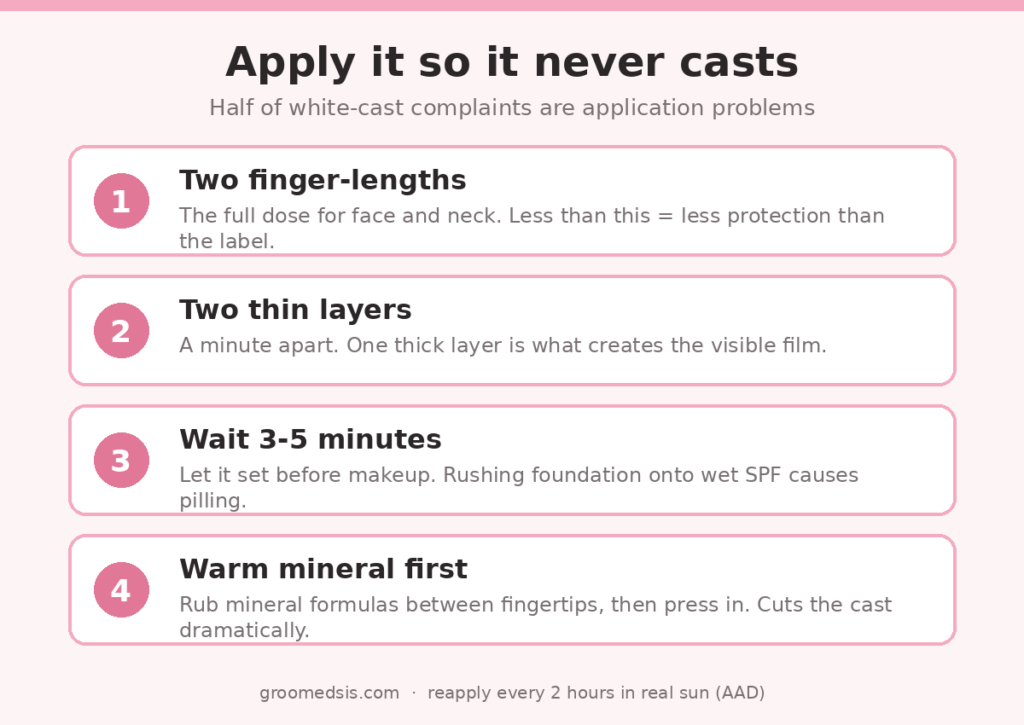
Half of “white cast” complaints are really application problems. Three fixes:
- Use enough, in two thin layers. The correct dose for face and neck is about two finger-lengths of product. Applying one thick layer is what creates a visible film; two thin layers a minute apart absorb clean.
- Wait before makeup. Give any sunscreen three to five minutes to set. Pilling and greyness usually come from rushing foundation on top of wet SPF.
- Warm mineral formulas first. Rub mineral sunscreen between your fingertips for a few seconds before pressing it in. It breaks the product down and cuts the cast dramatically.
And remember the step before sunscreen matters too: applying SPF over unwashed, oily skin is another common cause of patchiness, which the right cleanser choice prevents.
FAQ
Does brown skin really need sunscreen?
Yes, and arguably more urgently than fair skin when it comes to appearance. Melanin gives partial protection against burning, but according to the American Academy of Dermatology, UV and visible light trigger dark spots and uneven tone specifically in darker skin. Nearly every stubborn pigmentation problem has sun exposure feeding it. Sunscreen is step one of fading dark spots; treatments come second.
Are chemical sunscreens safe?
Chemical filters have decades of use behind them and remain recommended by dermatology bodies worldwide. The practical trade-off is simpler: chemical formulas disappear on brown skin, mineral formulas are gentler for highly reactive skin. Choose by your skin’s tolerance, not by fear-marketing. If any product stings or breaks you out, switch formulas, not sun protection itself.
Do I need to reapply over makeup?
Ideally yes, every two hours in real sun exposure, which the American Academy of Dermatology also advises. Realistically, over makeup, a tinted powder or stick SPF, or simply reapplying on exposed arms and reapplying your face formula before an afternoon outing, beats doing nothing. Indoors away from windows, a morning application largely carries you.
Will sunscreen cause vitamin D deficiency?
This worry is common in Pakistan, where deficiency is widespread even among people who never wear sunscreen. Incidental daily exposure, diet, and supplements (if your doctor advises them after a test) are the reliable fixes. Skipping SPF and collecting dark spots is a poor trade for vitamin D you can get safely elsewhere.
Why does my “no white cast” sunscreen still look grey on me?
Usually one of three reasons: it is an untinted mineral formula and your tone is deeper than the marketing photos, you applied one heavy layer instead of two thin ones, or it is a counterfeit. Check the ingredient list for zinc oxide or titanium dioxide without iron oxides, fix the application first, and always buy from verified sellers.
The bottom line
The best sunscreen with no white cast for brown skin is the one you will actually wear at 8 am on a normal Tuesday. If budget allows, Beauty of Joseon Relief Sun is the complete package. If value matters most, Skin Aqua Clear White delivers import quality under Rs 2,500. If dark spots are your real battle, Jenpharm Spectra Block Max’s iron-oxide tint gives you protection the clear formulas cannot. Pick one, use two fingers’ worth daily, and your future pigmentation routine, including any vitamin C serum you invest in, will finally have a chance to work.
Sources
American Academy of Dermatology. “The latest in sun protection.” https://www.aad.org/news/latest-in-sun-protection
Journal of Drugs in Dermatology. “Iron Oxides in Tinted Sunscreen for Hyperpigmentation: A Product Analysis and Literature Review,” May 2026. https://jddonline.com/articles/iron-oxides-in-tinted-sunscreen-hyperpigmentation-product-analysis-literature-review-S1545961626P9919X/
Dawn Images. “Sunscreen comparison: price, SPF, and white cast of popular sunscreens in Pakistan.” https://images.dawn.com/news/1191835