Choosing the right stretch mark cream for sensitive skin can feel overwhelming when most products on the shelf are loaded with fragrances, dyes, and harsh actives that leave reactive skin red and inflamed. If your complexion flares up at the slightest provocation, you already know that “effective” means nothing if the formula triggers burning, itching, or rashes.
This guide breaks down the science behind gentle yet powerful formulations, walks you through clinically studied ingredients, and shares practical strategies so you can fade visible lines without compromising your skin barrier. By the end, you will know exactly what to look for on a label, how to apply your cream for maximum absorption, and which lifestyle habits amplify your results.
Table of Contents

Why Sensitive Skin Needs a Specialized Approach to Stretch Marks
Stretch marks known clinically as striae distensae are a form of dermal scarring caused by rapid stretching of the skin during periods of growth such as pregnancy, puberty, or significant weight change. According to a narrative review published in the journal Cosmetics (PMC), the prevalence of stretch marks ranges between 50 percent and 90 percent, with women during pregnancy being the most commonly affected group.
Now layer on the reality of sensitive skin. A 2020 meta-analysis in the Journal of the European Academy of Dermatology and Venereology found that roughly 71 percent of the global adult population reports some degree of skin sensitivity, and about 40 percent classify their sensitivity as moderate to severe. That overlap creates a huge population of people who need stretch mark treatment but cannot tolerate standard formulas.
Generic creams often rely on retinoids, strong alpha-hydroxy acids, or synthetic fragrances. These activities can accelerate cell turnover and improve texture on resilient skin, but they frequently cause contact dermatitis, stinging, and barrier disruption in reactive complexions. A specialized stretch mark cream for sensitive skin swaps these aggressive ingredients for gentler alternatives that still deliver measurable improvement.
How Stretch Marks Form at the Dermal Level
Understanding biology helps you choose smarter products. Stretch marks begin in the dermis, the thick middle layer of your skin responsible for structural resilience. When the dermis is stretched beyond its mechanical limit, collagen and elastin fibers tear and reorganize into scar-like tissue.
The Role of Collagen and Elastin
Collagen provides tensile strength while elastin allows the skin to snap back after stretching. During rapid growth, hormones like cortisol can suppress fibroblast activity, reducing the production of both proteins. The NIH StatPearls resource on striae distensae explains that elastases released by mast cells and macrophages contribute to mid-dermal elastolysis, which leads to the characteristic atrophic streaks.
Striae Rubrae vs. Striae Albae
Fresh stretch marks appear as raised, reddish-purple lines called striae rubrae. Over months to years, they fade into flattened, hypopigmented scars known as striae albae. This distinction matters because topical creams are significantly more effective during the inflammatory rubrae stage, when blood flow is still active and fibroblasts are remodeling tissue.
Key Ingredients That Work Without Irritating Delicate Skin
Not every ingredient that reduces stretch marks is safe for reactive complexions. Below are the actives with the strongest evidence base and the lowest irritation profiles.
Centella Asiatica (Gotu Kola)
Centella asiatica is arguably the gold standard for sensitive-skin stretch mark care. A Cochrane-cited study indexed on PubMed found that a cream containing Centella asiatica extract, alpha tocopherol, and collagen-elastin hydrolysates was associated with significantly fewer women developing stretch marks compared to placebo, with an odds ratio of 0.41. A 2024 biological evaluation published in the journal Cosmetics confirmed that Centella asiatica reverses overexpression of connective tissue growth factor (CTGF), a key driver of dermal fibrosis in stretch mark tissue, effectively working on the root pathological pathways.
Hyaluronic Acid
Hyaluronic acid draws and binds moisture into the skin, plumping the dermis and improving the appearance of atrophic scars. According to Typology’s clinical summary, a 12-week trial in which women applied a cream containing hyaluronic acid, Centella asiatica, and onion extract twice daily showed meaningful reduction in stretch mark depth and discoloration. Because hyaluronic acid is naturally present in human skin, it carries virtually no irritation risk.
Vitamin E (Alpha Tocopherol)
Vitamin E is a fat-soluble antioxidant that protects cell membranes from oxidative damage and supports wound healing. It works synergistically with Centella asiatica to strengthen the dermal matrix. For sensitive skin, look for the tocopheryl acetate form, which is more stable and less likely to cause contact reactions than pure tocopherol.
Shea Butter and Plant Oils
Emollients like shea butter, jojoba oil, and rosehip seed oil reinforce the lipid barrier that sensitive skin struggles to maintain. They soften scar tissue, reduce transepidermal water loss, and deliver fatty acids that support collagen synthesis. These occlusive ingredients also help active compounds penetrate deeper by preventing premature evaporation.
What to Avoid on the Ingredient Label
Knowing what to exclude is just as important as knowing what to include. Here are the common offenders that reactive skin types should steer clear of:
- Synthetic fragrances and parfum: the single most common trigger for allergic contact dermatitis in skincare products
- Retinol and retinoids: powerful for cell turnover but notorious for causing peeling, redness, and photosensitivity on delicate skin, and contraindicated during pregnancy
- High-concentration glycolic acid: can thin an already compromised barrier when used above five percent on sensitive skin
- Parabens and formaldehyde releasers: preservatives linked to sensitization in individuals prone to eczema or dermatitis
- Denatured alcohol (alcohol denat.): strips the lipid barrier and amplifies transepidermal water loss
How to Choose a Safe and Effective Formula
Selecting the right product goes beyond scanning the ingredient list. You need to consider formulation philosophy, testing standards, and your personal skin history.
Look for Dermatologist-Tested and Hypoallergenic Labels
Products tested under dermatological supervision go through patch testing on volunteers with reactive skin. While “hypoallergenic” is not regulated by the FDA, reputable brands back the claim with clinical data. Cross-reference labels with published trial results whenever possible.
Prioritize Fragrance-Free Over Unscented
“Unscented” products may still contain masking fragrances that neutralize chemical odors without adding a noticeable scent. “Fragrance-free” means no fragrance compounds were added at all, which is the safer choice for anyone prone to contact reactions.
Check the Texture and Base
Lightweight, fast-absorbing bases are ideal because they encourage consistent use. Heavy, greasy formulas may clog pores or feel uncomfortable in warm climates, leading users to skip applications. Consistency is the single greatest predictor of topical treatment success.
Step-by-Step Application for Best Results
Even the most advanced stretch mark cream for sensitive skin will underperform without proper application technique. Follow this routine for optimal ingredient delivery.
Prep Your Skin
Cleanse the target area with a mild, sulfate-free wash to remove oil and dead cell buildup. Pat dry gently never rub so the surface is clean but the barrier is not disrupted.
Apply to Slightly Damp Skin
Applying cream to skin that is still slightly damp from bathing locks in additional moisture and improves penetration of water-soluble actives like hyaluronic acid. This simple step can measurably increase hydration levels in the epidermis.
Use Gentle Circular Massage
Massage the cream into the skin using light, circular motions for 60 to 90 seconds. This stimulates microcirculation, which delivers oxygen and nutrients to fibroblasts in the dermis. Avoid aggressive rubbing, which can trigger redness in sensitive skin types.
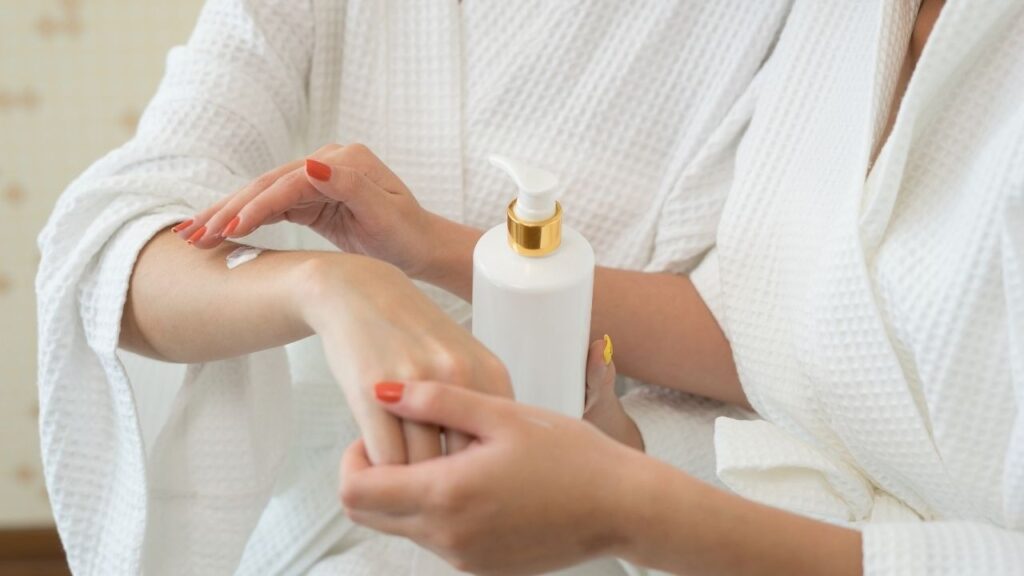
Maintain a Twice-Daily Schedule
Apply once in the morning and once after your evening shower. The research on striae rubrae treatment involving Centella asiatica and hyaluronic acid used twice-daily application over 12 weeks to achieve visible improvement, confirming that frequency and duration both matter.
Lifestyle Habits That Amplify Your Results
Topical treatment is one pillar of a broader strategy. Supporting your skin from the inside accelerates and sustains visible improvement.
Stay Hydrated
Adequate water intake supports skin turgor and helps maintain the hyaluronic acid your body naturally produces. Aim for at least two liters per day, adjusting upward in hot climates or during exercise.
Eat for Collagen Production
Foods rich in vitamin C (citrus, bell peppers, strawberries), zinc (pumpkin seeds, chickpeas), and omega-3 fatty acids (salmon, walnuts, flaxseed) provide the raw materials fibroblasts need to synthesize collagen and elastin. A nutrient-poor diet undermines even the best topical regimen.
Avoid Rapid Weight Fluctuations
Gaining or losing weight quickly places sudden mechanical stress on the dermis. Gradual changes allow collagen fibers to adapt, reducing the risk of new stretch marks forming while your cream works on existing ones.
Protect the Skin Barrier
Avoid long, hot showers that strip natural oils. Switch to lukewarm water and follow up with your gentle striae treatment cream immediately after toweling off. Protecting the barrier ensures that active ingredients stay in contact with the dermis instead of evaporating.
Real-World Results: What Consistent Use Looks Like
Anecdotal reports align with clinical findings. Many postpartum users notice visible fading of reddish-purple striae within eight to twelve weeks of twice-daily application of creams containing Centella asiatica and hyaluronic acid. Athletes who develop stretch marks from rapid muscle gain report improved skin texture and reduced discoloration after similar timeframes.
The key variable is consistency. Skipping days or switching products every few weeks resets progress. Commit to a single well-formulated product for a minimum of three months before evaluating results. For severe or deep striae albae, dermatologists may recommend combining topical treatment with professional procedures like microneedling or fractional laser therapy.
Common Challenges and How to Overcome Them
Treating stretch marks on sensitive skin comes with unique obstacles. Anticipating them helps you stay on track.
Allergic Reactions to New Products
Always perform a 48-hour patch test on a small area of your inner forearm before applying any new cream to larger surfaces. If redness, itching, or bumps appear, discontinue use immediately. This simple precaution prevents full-body flare-ups.
Slow Visible Progress
Stretch marks are dermal scars, not surface blemishes. Unlike hyperpigmentation, which can fade in weeks, structural changes in the dermis take months to remodel. Track your progress with monthly photos taken in the same lighting to spot gradual improvements your eyes might miss day to day.
Misleading Marketing Claims
Be skeptical of products promising to “erase” or “eliminate” stretch marks in days. A review published in the journal Cosmetics (PMC) notes that no fully effective treatment for stretch marks has emerged to date. Realistic expectations visible reduction rather than complete removal lead to better adherence and satisfaction.
Sensitive Skin Safety: Pregnancy and Postpartum Considerations
Pregnancy is the single most common trigger for new stretch marks, with the prevalence of striae gravidarum reported at approximately 60 percent in clinical cross-sectional studies. This is also a time when ingredient safety is paramount.
Avoid retinoids entirely during pregnancy and breastfeeding. Centella asiatica, hyaluronic acid, shea butter, and vitamin E are all considered safe for topical use during pregnancy, though you should always confirm with your obstetrician. Start applying your chosen sensitive-skin-safe striae cream from the second trimester onward, when skin stretching accelerates, to get ahead of new mark formation.
When should I start using a stretch mark cream on sensitive skin?
Begin as early as possible, ideally when skin stretching first starts. During pregnancy, the second trimester is the most commonly recommended starting point. For adolescents or those gaining weight, start at the first sign of skin tightness or faint reddish lines.
Can stretch mark creams completely remove existing marks?
No topical cream can fully eliminate stretch marks, especially mature white striae albae. However, consistent use of creams with Centella asiatica and hyaluronic acid can visibly reduce depth, discoloration, and texture roughness over several months.
How long does it take to see results?
Most clinical studies show measurable improvement within 8 to 12 weeks of twice-daily application. Older, deeper marks may take six months or longer to show noticeable change.
Are natural ingredients always safer for sensitive skin?
Not necessarily. Natural does not automatically mean non-irritating. Essential oils like tea tree, lavender, and citrus extracts are natural but can trigger contact dermatitis in reactive skin. Always check for patch-test data regardless of whether the ingredient is plant-derived or synthetic.
Can men use a gentle striae cream designed for reactive skin?
Absolutely. Stretch marks affect all genders. Research from Frontiers in Medicine indicates that 50 to 60 percent of men report some degree of skin sensitivity, making gentle formulations just as relevant for male users dealing with striae from muscle building or weight change.
Should I combine cream with professional treatments?
For stubborn or extensive striae, pairing a topical cream with dermatologist-guided treatments like microneedling or fractional laser can produce stronger outcomes. The cream maintains daily hydration and collagen support between sessions.