Figuring outhow to style hair without heat is one of the best decisions you can make for the long-term health of your strands. Flat irons, curling wands, and blow dryers may deliver instant results, but they come at a steep cost. A 2025 study published in the Journal of Cosmetic Dermatology found that daily blow-drying at 60°C for just one month caused visible cuticle lifting, reduced water content, and significant protein loss in hair fibers.
The good news? You do not need high temperatures to get bouncy curls, beachy waves, or a sleek blowout finish. This guide covers every heatless styling technique worth trying, backed by real science and practical tips that actually work across hair types.
Table of Contents
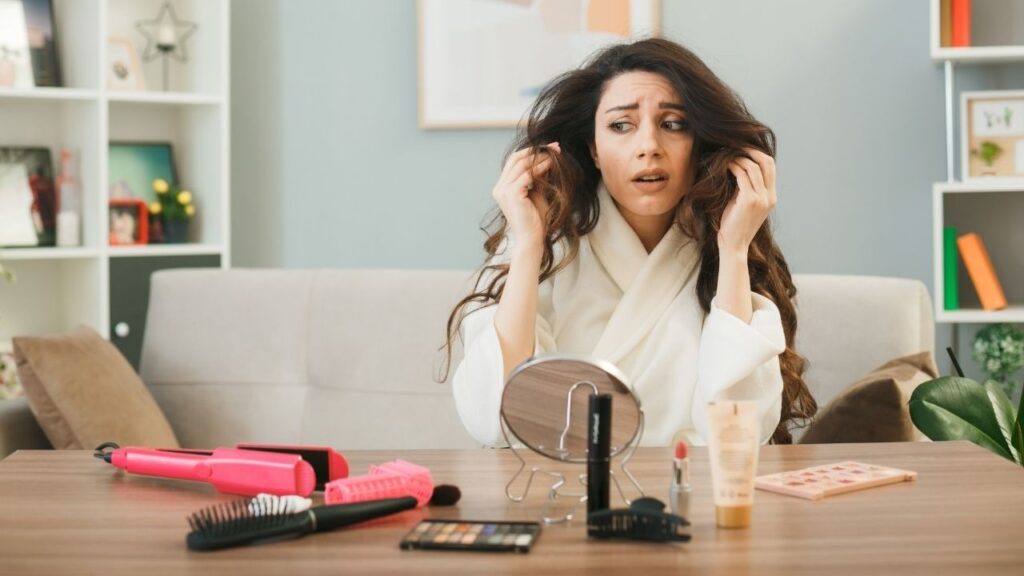
Why Heat Styling Causes Lasting Damage
Most people underestimate what happens when a hot tool touches their hair. Understanding the mechanism behind thermal damage makes it easier to commit to gentler alternatives.
How High Temperatures Break Down Hair Protein
Hair is built from keratin, a tough structural protein held in shape by hydrogen bonds and disulfide bridges. Research from the International Journal of Cosmetic Science identified 140°C (284°F) as the critical threshold. Below that temperature, changes to the fiber remain reversible. Above it, structural modifications become permanent and progressively more severe.
At 200°C (392°F), most flat irons’ default setting, total degradation of the cuticle structure occurs. The protective outer layer cracks, exposing the inner cortex to moisture loss and environmental stress. A Purdue University study published in Environmental Science & Technology (2025) also discovered that heat styling above 300°F produces indoor nanoparticle concentrations exceeding 100,000 particles per cubic centimeter, raising air quality concerns alongside hair health risks.
Cumulative Effects You Cannot Reverse With Products
Single heat exposures at moderate temperatures are manageable. The real problem is repetition. Research on curl reversion and damage showed that hair straightened 50 times at 220°C permanently lost its natural curl pattern and became significantly weaker and more breakable. At 185°C, the same hair recovered fully after wetting.
Color-treated strands are even more vulnerable. Heat accelerates pigment fading and weakens already-compromised bonds, making recovery difficult regardless of how many repair masks you apply.
Recognizing Heat Damage in Your Own Hair
Catching the signs early lets you course-correct before the damage becomes irreversible. According to the YouGov US Hair Care Trends survey (2025), frizz or damage affects roughly 24% of American adults to some degree. Here is what to watch for:
- Persistent dryness that does not improve with deep conditioning
- Split ends that travel upward along the shaft
- A rough, straw-like texture when you run fingers through your strands
- Loss of natural shine that makes hair look flat and lifeless
- Curls or waves that refuse to form or hold shape
- Noticeable thinning concentrated at the ends
Overnight Braiding Methods for Effortless Waves
Braiding damp hair before bed remains one of the simplest and most reliable heatless styling techniques. The concept is straightforward: wet hair takes the shape of whatever form it dries in, and braids create consistent wave patterns without any tools.
Classic Three-Strand Braids
This is the starting point for beginners. Divide your hair into two sections, braid each loosely, and secure with soft scrunchies (not tight elastics, which leave creases). The result is a relaxed, lived-in wave pattern perfect for casual days.
For better definition, start with hair that is about 70-80% dry. Soaking wet hair takes too long to dry overnight and can develop a musty smell. Lightly misting with water from a spray bottle gives you the ideal dampness level.
French and Dutch Braids for Root Volume
Standard braids leave the roots flat because the wave pattern starts several inches from the scalp. French and Dutch braids solve this by incorporating hair from the crown downward. The waves begin much closer to the root, adding volume and movement throughout the full length.
Dutch braids, where strands cross under rather than over, tend to produce slightly more pronounced waves. Try both and see which suits your texture.
Fishtail Braids for Tighter Texture
Fishtail braids use smaller sections of hair, which creates a finer, more textured wave pattern resembling beachy, salt-sprayed curls. They take a few extra minutes to put in but reward you with noticeably more definition than standard three-strand braids.
A practical tip: apply a lightweight styling cream before braiding. This gives the waves better hold and reduces frizz when you take the braids out the next morning.
Twist, Pin, and Wrap Techniques for Defined Curls
Braids produce waves. Twists and wrapping methods produce curls. If you want ringlets, spirals, or bouncy blowout-style volume, these techniques deliver.
Bantu Knots for Bouncy Ringlets
Bantu knots involve twisting sections of damp hair and coiling them into small buns secured flat against the scalp. Smaller sections create tighter curls; larger sections give looser, voluminous results. This method works exceptionally well on natural and textured hair but adapts to all types.
Leave them in overnight or for at least six hours. When you unravel each knot, resist the urge to brush. Instead, separate curls gently with your fingers and shake at the root for volume.
Pin Curls for Vintage Glamour
Pin curls use small sections of hair wound around your finger and pinned flat to the head with bobby pins or duckbill clips. This technique dates back to the 1920s and still produces some of the most polished, defined curls achievable without heat.
The key variable is the direction you wind each section. Alternating clockwise and counterclockwise creates natural-looking movement. Winding all curls in one direction gives a more uniform, old Hollywood finish.
The Sock Curl Method
This is the technique that dominates social media right now. The Everygirl tested five viral heatless methods and ranked sock curls as the clear winner for ease, comfort, and results. The process is dead simple: divide your hair into two sections, wrap each around a long sock, and roll the opening of the sock upward to secure everything in place.
Sock curls are comfortable enough to sleep in, require zero special tools, and produce the classic bouncy blowout curl that looks like you spent an hour with a round brush and dryer. They work best on medium to long hair.
Heatless Curling Rods and Headband Rollers
The heatless curler market has exploded. According to Archive Market Research, the global heatless curler market was estimated at $500 million in 2025, with a projected compound annual growth rate of 15% through 2033. That growth reflects a genuine shift in consumer behavior, not just a passing fad.
Satin Ribbon and Rod Sets
Satin-wrapped rods minimize friction, which reduces breakage and helps retain moisture while your hair sets. You wrap sections of damp hair around the rod, secure with a clip, and sleep on them. The satin surface also prevents the frizz that foam or rubber rollers often cause.
These sets typically cost between $10 and $25 and last for months. They are one of the best cost-to-result investments in the heatless styling space.
Headband Curler Technique
This method uses a single padded headband placed on top of the head. You wrap sections of hair around it, moving from front to back on each side. The result is large, voluminous curls that mimic a professional blowout.
Search interest data from Accio shows that “heatless curls headband” peaked at a search index of 85 during November 2024 and remains a top-searched beauty product query. January 2025 alone saw over 14,000 units sold of overnight curling sets on major e-commerce platforms.
Air-Drying Tips That Actually Make a Difference
How you dry your hair sets the foundation for every heatless style. Rushing this step or using the wrong materials introduces frizz before you even begin styling.
Ditch the Terry Cloth Towel
Standard bath towels have a rough texture that catches and roughs up the cuticle layer. Switch to a microfiber towel or a plain cotton t-shirt. Both absorb moisture effectively while creating far less friction. Gently squeeze never rub excess water from your hair after washing.
The Plopping Method for Wavy and Curly Textures
Plopping involves laying a t-shirt flat, flipping your wet hair forward onto it, and wrapping the shirt around your head to form a secure bundle. This allows curls to set in their natural pattern without being stretched or weighed down by gravity.
The technique works best for those with type 2B waves through type 4C coils. Leave the wrap on for 20-45 minutes (not overnight, which can cause over-drying), then let your hair finish air-drying loose.
Products That Enhance Air-Dried Results
The right product makes an enormous difference between shapeless, frizzy air-dried hair and defined, touchable texture. Focus on these categories:
- Leave-in conditioner to lock in moisture and smooth the cuticle
- Curl cream or mousse for definition and soft hold
- Sea salt spray for added texture and grip (best for fine hair)
- Anti-frizz serum for humidity protection and shine
- Lightweight flexible-hold spray for finishing without stiffness
Apply products to soaking wet hair, not damp hair. Water helps distribute product evenly and prevents uneven absorption that leads to crunchy patches.
Building a Complete Heatless Styling Routine
Knowing individual techniques is useful. Combining them into a weekly routine is what produces real, lasting change in your hair’s health and appearance.
A Sample Weekly Schedule
Monday and Thursday work well as wash days for most people. On wash nights, apply your products to wet hair, choose your heatless styling method (braids for waves, socks or rods for curls), and sleep on it. By morning, you have a fresh style that lasts two to three days with minimal touch-up.
Mid-week, refresh with a light mist of water and a small amount of styling cream. Pineapple your hair (gather it in a loose, high ponytail) at night to preserve shape while you sleep.
Adjusting for Different Hair Types
Fine hair benefits most from braiding techniques and lightweight mousse, since heavy creams and rods can flatten it. Thick or coarse hair responds better to Bantu knots and satin rods, which have enough grip to shape denser strands. Curly and coily textures get the best results from plopping combined with a generous application of leave-in conditioner.
Experimentation is part of the process. The first attempt rarely produces perfect results. Give any new method three tries before deciding whether it works for your texture.
Final Thoughts
Switching to heatless styling is not about sacrificing results. It is about choosing methods that deliver gorgeous hair today while protecting it for the future. The science is clear: temperatures above 140°C cause irreversible structural damage to keratin fibers, and repetitive heat exposure compounds that damage over time.
Whether you start with simple overnight braids or invest in a satin curling rod set, every heat-free session is a win for your strands. Your hair will respond with better moisture retention, more natural shine, and stronger resistance to breakage. Start with one technique this week and build from there.
Does sleeping in braids damage your hair?
No, as long as you use soft fabric scrunchies and keep the braids loose. Tight braids or rubber bands create tension that can lead to breakage at the hairline. Loose braids on slightly damp hair are perfectly safe for nightly use.
How long do heatless curls last compared to heat-styled curls?
With the right products, heatless curls last two to three days. Heat-styled curls may hold their shape slightly longer on the first day, but they degrade your hair over time, making future styles harder to maintain.
Can heatless methods work on short hair?
Yes, though technique selection matters. Pin curls and small Bantu knots work well on hair as short as three inches. Headband curlers and sock curls need at least shoulder-length hair to wrap properly.
What is the fastest heatless curling method?
Sock curls take less than five minutes to put in and deliver results after four to six hours. If you set them before bed, you wake up with finished curls and zero active styling time.
Will my hair still look polished without heat tools?
Absolutely. The key is using the right products and allowing enough drying time. Many professional stylists now recommend limiting heat to special occasions and relying on heatless techniques for daily wear. The 2025 curly hair trend report from Zaphira Nature confirms that air-dried, low-manipulation styles are among the top beauty trends this year.
Is the plopping method good for straight hair?
Plopping enhances existing wave or curl patterns. If your hair is naturally pin-straight, plopping alone will not create curls. Pair it with overnight braids or twists for best results on straight textures.