Your everyday beauty routine is the single most powerful tool you have for transforming dull, uneven skin into a glowing, resilient complexion. Yet most people assemble their regimens from viral social media clips rather than clinical evidence, wasting both time and money on products that conflict with one another.
A landmark Northwestern University study brought together 80 dermatologists from 43 institutions to identify just 23 ingredients that genuinely work. Their consensus was clear: simplicity, consistency, and sun protection outperform elaborate multi-step routines every time.
This guide walks you through the exact morning and nighttime sequences that board-certified professionals recommend, supported by real data and practical tips you can act on today.
Table of Contents

Why Your Everyday Beauty Routine Matters More Than Expensive Products
The global skincare market surpassed $122 billion in 2025 and is projected to reach $227 billion by 2034, growing at roughly 7.3% annually. Despite this massive spending, dermatologists repeatedly observe that the most common patient mistake is not using the wrong product it is using products inconsistently or in the wrong order.
Skin cells renew on a cycle of approximately 28 days. This biological clock means that any effective everyday beauty routine requires at least four weeks of consistent application before visible results appear. Skipping days or constantly switching products disrupts this renewal process and delays outcomes.
The Shift Toward Skinimalism
Dermatologists across multiple practices are now advocating a less-is-more philosophy. Dr. Mary Sommerlad and other board-certified experts caution that layering too many active ingredients retinol, glycolic acid, vitamin C, and niacinamide simultaneously often damages the skin barrier rather than improving it, causing dryness, sensitivity, and inflammation (Refinery29).
The Optima Dermatology team is also encouraging patients to simplify their routines and focus on hydration and barrier-strengthening products rather than over-exfoliating with multiple actives.
A well-structured everyday beauty routine needs only three foundational products: a gentle cleanser, a suitable moisturizer, and broad-spectrum sunscreen. Everything else is optional and should be introduced one product at a time.
Morning Everyday Beauty Routine: Protection and Preparation
Your morning routine serves one primary goal defending your skin against environmental stressors including UV radiation, pollution, and blue light. Every step should build toward that protective barrier.
Step 1: Gentle Cleansing
Use a mild, pH-balanced cleanser with lukewarm water. Hot water strips the skin of its natural lipids, weakening barrier function. For oily skin, gel-based cleansers containing salicylic acid or niacinamide help control sebum (Eightmo Dermatology Guide). For dry skin, cream-based cleansers with ceramides preserve hydration.
Pat your face partially dry with a clean towel. Slightly damp skin absorbs serums and moisturizers more effectively than completely dry skin.
Step 2: Antioxidant Treatment
A vitamin C serum applied in the morning neutralizes free radicals from UV exposure and pollution throughout the day. Research consistently shows that topical vitamin C inhibits tyrosinase, the enzyme responsible for melanin overproduction, making it one of the most effective brightening actives available without a prescription (The Method).
Apply 3–4 drops to your face and neck before heavier products. Allow about 60 seconds for absorption.
Step 3: Moisturizer
Moisturizers seal active ingredients in and create a protective film. Look for formulas containing humectants like hyaluronic acid and glycerin, which draw moisture into the skin, along with ceramides that reinforce the skin barrier. Dr. Sommerlad recommends gentle yet effective creams with strengthening peptides and hydrating hyaluronic acid for the face, neck, and chest (Refinery29).
Step 4: Sunscreen (Non-Negotiable)
Daily broad-spectrum SPF 30 or higher is the single most impactful anti-aging step you can take. A retinoid-and-sunscreen pairing achieved a 96.8% consensus among dermatologists as the most effective anti-aging combination in modern practice (The Method). Apply sunscreen as the final skincare step, even on overcast days or when working indoors near windows.
Dermatologists at Columbia Skin Clinic recommend options like EltaMD UV Clear Broad-Spectrum SPF 46 for sensitive or acne-prone skin, and emphasize thinking of sunscreen as the most powerful anti-aging step in your routine.
Pro Tip: Reapply sunscreen every two hours during prolonged sun exposure, or immediately after sweating or swimming. Most people underapply by 50%, so use about a nickel-sized amount for the face alone.
Nighttime Everyday Beauty Routine: Repair and Renewal
While you sleep, your skin shifts into repair mode. Cell turnover accelerates, blood flow to the dermis increases, and collagen synthesis peaks. Your nighttime everyday beauty routine should capitalize on these biological processes by delivering active treatments that are too potent or photosensitive for daytime use.
Step 1: Double Cleansing
Start with an oil-based cleanser to dissolve makeup, sunscreen, and sebum. Follow with a water-based cleanser to remove any remaining residue. This two-step approach, backed by decades of dermatological practice, ensures a completely clean canvas for treatment products without aggressive scrubbing.
Step 2: Active Treatments (Retinoids or Exfoliating Acids)
Retinoids remain the gold standard for anti-aging, acne management, and texture refinement. Dr. Marisa Garshick of MDCS Dermatology recommends retinaldehyde as a middle-ground option more potent than over-the-counter retinol but less irritating than prescription tretinoin (Refinery29).
If you use chemical exfoliants like AHAs or BHAs, alternate nights with retinoids rather than layering them together. Overuse of multiple actives simultaneously is a leading cause of barrier damage, according to dermatologists surveyed in the Northwestern ingredient study.
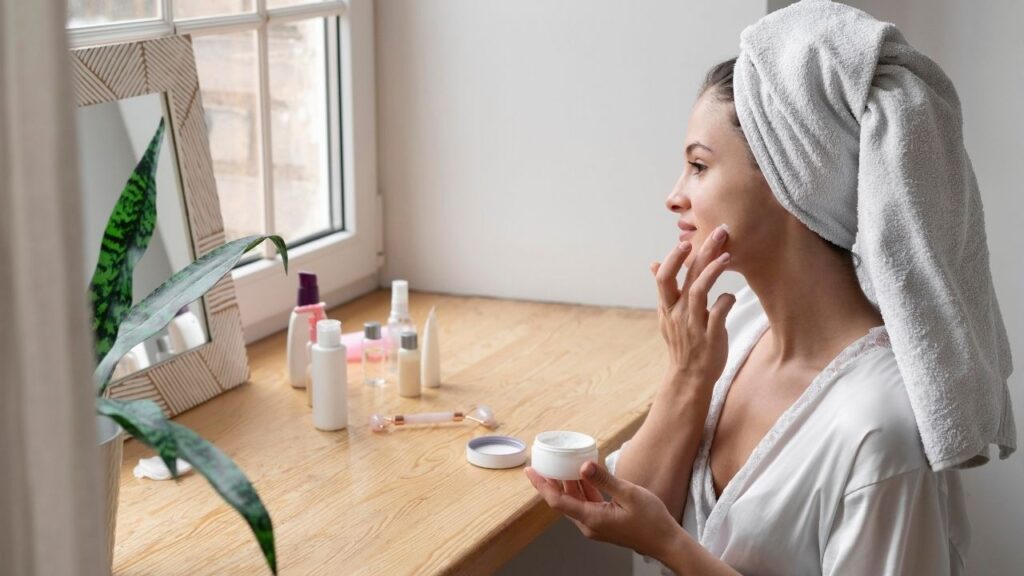
Step 3: Rich Night Moisturizer or Sleeping Mask
Nighttime moisturizers should be richer than daytime formulas. Peptides, which stimulate collagen production and improve skin firmness, are increasingly recommended by dermatologists as a key nighttime ingredient (Optima Dermatology). Pair them with hyaluronic acid for deep overnight hydration.
Step 4: Eye Cream and Targeted Treatments
The skin around the eyes is thinner and more delicate than the rest of the face. Dedicated eye creams containing caffeine (for puffiness), niacinamide (for dark circles), and peptides (for fine lines) address concerns that general moisturizers cannot adequately treat.
Everyday Beauty Routine by Skin Type
Not every complexion responds to the same products. Tailoring your everyday beauty routine to your specific skin type prevents irritation and maximizes results.
Oily Skin
Use gel-based or foaming cleansers with salicylic acid or niacinamide to help control excess oil production. Choose lightweight, oil-free moisturizers and avoid heavy creams that clog pores (Eightmo Dermatology Guide). A mattifying sunscreen keeps shine under control throughout the day.
Dry Skin
Opt for cream-based cleansers and rich moisturizers packed with hyaluronic acid, glycerin, or ceramides to lock in hydration (Refinery29). Avoid foaming cleansers that strip moisture, and consider adding a facial oil as the final evening step for extra barrier repair.
Sensitive Skin
Fragrance-free, hypoallergenic products are essential. A board-certified dermatologist and co-founder of ERLY skincare emphasizes that a gentle cleanser is the cornerstone of every routine, regardless of age (ERLY). Introduce new actives slowly and patch test before full application.
Combination Skin
Zone-based application works best. Use lightweight gel moisturizers on oily areas like the T-zone, and richer creams on dry patches around the cheeks and jawline. A gentle, non-stripping cleanser that balances both zones is your best foundation product.
Product Layering Order: The Complete Reference
Applying products in the correct sequence ensures each one absorbs properly and functions as intended. The universal rule is thinnest to thickest consistency.
Morning (Protect) | Nighttime (Repair)
- Gentle cleanser | 1. Oil-based cleanser
- Toner (optional) | 2. Water-based cleanser
- Vitamin C serum | 3. Exfoliant or retinoid
- Moisturizer | 4. Night moisturizer / mask
- Sunscreen SPF 30+ | 5. Eye cream / spot treatment
Common Mistakes That Sabotage Your Everyday Beauty Routine
Overloading on Active Ingredients
A related Northwestern University study examined teen content creators on TikTok and found alarming trends: participants used an average of six face products per routine, with some applying over 12 products containing up to 11 potentially irritating active ingredients. This trend is not limited to teenagers adults frequently fall into the same trap, resulting in compromised barriers and worsened skin conditions.
Skipping Sunscreen on Cloudy or Indoor Days
UV rays penetrate cloud cover and windows. Dermatologists at Columbia Skin Clinic stress that daily SPF is the most effective anti-aging intervention, surpassing even retinoids when applied consistently year-round. One out of five Americans will develop some form of skin cancer by age 70 (Apex Skin), making daily sunscreen a health priority, not just a cosmetic one.
Neglecting the Neck and Chest
Dr. Mary Sommerlad notes that the neck and décolletage are among the most neglected areas in personal care, despite being highly vulnerable to sun damage and premature aging. However, the skin here is delicate and may not tolerate high-strength acids the same way the face does (Refinery29). Extending your moisturizer and sunscreen to these areas adds only seconds to your routine but years to your skin’s youthful appearance.
Switching Products Too Frequently
Abandoning a product after one or two weeks prevents you from accurately evaluating its effectiveness. Skin cell turnover requires a minimum of 28 days, and many active ingredients like retinoids need 8–12 weeks to show full results.
Best Everyday Beauty Routine for Beginners
If you feel overwhelmed by the sheer number of available products, start with the absolute essentials. Every dermatologist interviewed across multiple sources agrees on this core trio:
- A gentle, fragrance-free cleanser suited to your skin type
- A moisturizer containing ceramides or hyaluronic acid for barrier support
- A broad-spectrum sunscreen of SPF 30 or higher, applied daily without exception
This three-step everyday beauty routine, endorsed by virtually every dermatologist practicing today, addresses the most critical needs cleanliness, hydration, and UV protection (ERLY). Once these three become habitual over 3–4 weeks, you can introduce one treatment product at a time, such as a vitamin C serum in the morning or a retinoid at night.
Building a Sustainable Everyday Beauty Routine: Practical Tips
Anchor Your Routine to Existing Habits
Behavioral research shows that linking a new habit to an established one such as applying serum immediately after brushing your teeth significantly increases long-term adherence. After approximately 21 days of consistent repetition, the routine becomes automatic.
Track Progress With Photos
Take a photo in the same lighting conditions once per week. Gradual improvements are nearly invisible in the mirror day to day, but side-by-side monthly comparisons reveal meaningful changes in texture, tone, and clarity.
Budget-Friendly Approach
Dermatologist-developed drugstore brands like CeraVe, La Roche-Posay, Alastin, and EltaMD consistently receive clinical endorsements and often outperform luxury alternatives (Optima Dermatology). Consumers increasingly prefer these science-backed brands over influencer-endorsed lines with questionable verification. An effective everyday beauty routine does not require a large budget.
How Seasonal Changes Affect Your Everyday Beauty Routine
Your skin’s needs shift with humidity, temperature, and UV intensity. In winter, barrier-repair creams with ceramides and heavier occlusives prevent transepidermal water loss. In summer, lightweight gel moisturizers and higher SPF formulations keep skin protected without clogging pores.
Adjusting one or two products seasonally rather than overhauling your entire routine maintains the consistency your skin requires while adapting to environmental changes.
Q: How many steps should an everyday beauty routine include?
A: Dermatologists recommend three core steps as a minimum cleanser, moisturizer, and sunscreen. Most people see excellent results with 4–5 total steps. Routines exceeding 7–8 products often cause irritation and barrier damage without additional benefit.
Q: How long does it take to see results from a consistent skincare routine?
A: Skin cell turnover takes approximately 28 days, so expect initial improvements within 4–6 weeks. Active ingredients like retinoids may take 8–12 weeks for full visible results. Patience and consistency are essential.
Q: Can I use vitamin C and retinol in the same routine?
A: Yes, but not in the same application step. The most effective approach is to use vitamin C in the morning for antioxidant protection and retinol at night for repair. Using them simultaneously can cause irritation and reduce the efficacy of both.
Q: Is an expensive everyday beauty routine better than a budget one?
A: Not necessarily. The effectiveness of skincare depends on ingredient quality and formulation, not price. Drugstore brands like CeraVe and La Roche-Posay are formulated with the same science-backed actives found in luxury products and are frequently recommended by dermatologists (Optima Dermatology).
Q: Do men need a different everyday beauty routine than women?
A: The fundamental steps cleansing, moisturizing, and sun protection are identical for all skin regardless of gender. Men may benefit from slightly different textures (lighter gels) and should apply SPF after shaving to protect freshly exfoliated skin.
Q: Should I change my routine with the seasons?
A: Yes, minor adjustments help. Switch to richer moisturizers in winter when humidity drops, and opt for lighter, oil-free formulas in summer. Your cleanser and sunscreen may also need seasonal tweaks, but keep your core routine stable.
Q: What age should I start a daily skincare routine?
A: Dermatologists recommend beginning a basic routine in your teens. PA Sheridan Oliver atApex Skin insists that people of every age use sunscreen with SPF 30 or greater daily, even in winter, to protect against harmful UV rays and blue light exposure that can prematurely age skin.
Q: Is double cleansing necessary every night?
A: Double cleansing is essential on days you wear makeup or sunscreen, as water-based cleansers alone cannot fully dissolve oil-based products. On bare-skin days, a single gentle cleanser is sufficient.
Final Thoughts
An effective everyday beauty routine is not about owning the most products or following the most elaborate steps. The science is clear: three to five well-chosen, consistently applied products outperform a shelf full of trendy alternatives. Cleanse gently, treat strategically, moisturize faithfully, and protect with sunscreen daily.
Start with the essentials this week, give your skin a full 28-day cycle to respond, and track your progress with weekly photos. The results will speak for themselves.