Am I using too many skin care products is the quiet question almost every beauty lover asks while staring at a cluttered bathroom shelf. If your skin feels tight, blotchy, or mysteriously breakout-prone despite a long regimen, the fix may not be another serum, it might be fewer products.
A 2023 Morning Consult survey commissioned by the Environmental Working Group found that the average adult now uses 12 personal care products daily, up from 9 in 2004. That much product on one face can stress the skin far more than it helps.
This guide breaks down the real warning signs of overload, the dermatology behind a damaged barrier, and a step-by-step reset that actually calms your skin.
Table of Contents

Why “More Products” Isn’t Always Better
A multi-step lineup feels productive, but clinical research often shows the opposite. A study in the Journal of Cosmetic Dermatology reported that frequent application of potent actives can compromise the skin barrier and raise sensitivity (Kumar et al., 2022), as cited by the MedReport Foundation.
Your skin barrier, the stratum corneum, is a thin outer layer of cells held together by lipids. When too many cleansers, acids, or retinoids hit it in a single day, that brick-and-mortar wall starts leaking moisture and absorbing irritants, according to a review published in PMC / National Library of Medicine.
A real-world example: clients who simplify from 8–10 products down to 3–4 essentials often see calmer, clearer skin within 3 to 6 weeks. The skin does not need more help it needs less interference.
Warning Signs You’re Overloading Your Skin
Your face signals distress loudly once it has had enough. You don’t need lab tests, just honest observation.
Common Overload Symptoms
Watch for these red flags in your daily routine:
- Stinging or burning after applying moisturizer, which should feel soothing.
- Flaky patches that persist no matter how much cream you apply.
- New breakouts along the jawline, forehead, or cheeks that were previously clear.
- Lingering redness for more than 20 minutes after cleansing.
- A tight, shiny feeling that people confuse with “glow” but is actually stripped skin.
- Products that once worked are now causing irritation.
If three or more of these apply to you, your barrier is asking for a break, not another treatment.
The Science Behind Skincare Overload
How Your Skin Barrier Gets Damaged
Healthy skin maintains a slightly acidic pH of about 4.7 to 5.75. Harsh cleansers, over-exfoliation, and aggressive actives raise this pH, weakening the lipids that lock in moisture.
The American Academy of Dermatology notes that over-washing and frequent exposure to irritants are leading causes of barrier disruption. Once the barrier thins, transepidermal water loss (TEWL) rises meaning moisture escapes faster than any cream can replace.
Active Ingredient Conflicts You Should Know
Not every active plays well with others. Pairing the wrong two is one of the most overlooked reasons people damage their skin.
Quick Reference: Common Ingredient Clashes
| Ingredient A | Ingredient B | Why It’s a Problem |
| Retinol | AHAs or BHAs (glycolic, salicylic) | Doubles irritation, weakens barrier |
| Vitamin C (L-ascorbic acid) | High-percentage Niacinamide | Reduced efficacy, occasional flushing |
| Benzoyl Peroxide | Retinol | Deactivates retinol, causes dryness |
| Glycolic Acid | Salicylic Acid | Over-exfoliation, risk of chemical burn |
| Retinoids | Vitamin C (same routine) | pH conflict, spikes in sensitivity |
Layering any two of these in the same routine is like mixing medications without a prescription the outcome rarely matches the goal.
Common Mistakes That Push People Into Overuse
Social Media Pressure
Social media plays a huge role in skincare overload. The American Academy of Dermatology has publicly cautioned against TikTok-driven regimens that push users toward 10-step routines most dermatologists would never recommend.
Impatience With New Products
Another frequent mistake is product rotation without patience. Skin usually needs 6 to 12 weeks to show meaningful results from a new product, but many people swap formulations every 7 to 14 days. According to Drive Research, 90% of women report frustration finding skincare that actually works often because they never give products enough time.
Over-Cleansing
Over-cleansing is the quietest culprit. Washing your face more than twice a day with an active cleanser strips natural oils and triggers rebound oil production, which convinces people they need even more products to “fix” the oiliness.
How to Build a Balanced, Minimalist Skincare Routine
The Core Four Essentials
A dermatologist-backed minimalist routine typically uses just four products: a gentle cleanser, a hydrating moisturizer, a broad-spectrum SPF 30 or higher sunscreen, and one targeted treatment such as a retinoid or vitamin C (but not both at once).
This approach matches the guidance from the American Academy of Dermatology, which recommends keeping routines simple and introducing actives one at a time.
Morning Routine
Start with a pH-balanced cleanser, or just lukewarm water if you cleansed the night before. Follow with an optional antioxidant serum, a lightweight moisturizer, and sunscreen.
That’s enough. Anything else belongs in your occasional-use drawer, not your daily lineup.
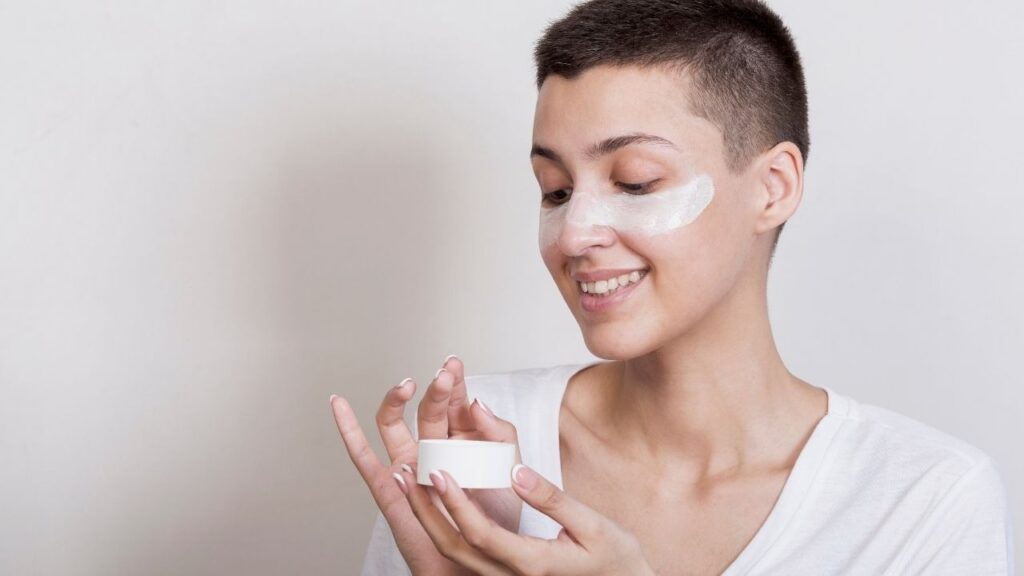
Evening Routine
Cleanse once double cleanse only if you wore heavy makeup or SPF. Apply a targeted treatment up to three nights per week if you are new to actives, then finish with a ceramide or hyaluronic acid moisturizer.
Give your face at least one rest night a week with nothing but moisturizer. Dermatologists call this “skin cycling,” and it genuinely works.
How to Reset an Overwhelmed Skin
The 14-Day Barrier Repair Reset
If your skin is already inflamed, strip everything down to three products for two weeks: a fragrance-free cleanser, a ceramide-rich moisturizer, and sunscreen. Skip all exfoliants, retinoids, and vitamin C.
Most people see noticeable calming within 7 to 10 days. Research published in the National Library of Medicine confirms that the stratum corneum can self-repair when inciting triggers are removed and hydration is supported.
What to Reintroduce First
Add ingredients back slowly, one at a time, with at least two weeks between additions. Niacinamide at 4–5% is the ideal first step because it strengthens the barrier while treating texture and redness.
Bring back stronger actives like retinol only after your skin has stayed calm for a full month.
When It’s Time to See a Dermatologist
Not every case can be solved by product elimination. If you notice open sores, cracked skin, painful flaking, or irritation that persists beyond four weeks of simplification, book a board-certified dermatologist.
Persistent redness can also signal rosacea, perioral dermatitis, or contact allergy, all of which require prescription treatment rather than more toner.
Final Thoughts
If you find yourself genuinely asking am I using too many skin care products, the honest answer based on the data and the dermatology is usually yes. Simplification is not a step backward. It is a strategic reset that allows your skin to function the way it was designed to.
Pick a few high-quality essentials, give them time, and watch your skin recover over weeks, not days. Your face and your wallet will thank you.
How many skin care products should I use in a day?
Most dermatologists recommend three to five: cleanser, moisturizer, sunscreen, and one or two targeted treatments. A Drive Research survey found that 25% of women use five or more products at night, though this is usually unnecessary for healthy skin.
Can using too many products cause acne?
Yes. Pore-clogging ingredients, heavy layering, and disruption of the skin’s microbiome all trigger breakouts. A compromised barrier also produces more oil and reacts more strongly to bacteria.
How long does barrier repair take?
Mild cases usually recover in 2 to 4 weeks once the routine is simplified. Severe damage from chronic over-exfoliation or strong prescription retinoids can take 2 to 3 months.
Is a 10-step Korean skincare routine too much?
Not necessarily but only when the steps are gentle, hydrating, and not active-heavy. Problems appear when people mistakenly layer 10 strong ingredients instead of 10 mild, compatible ones.
Should I stop using active ingredients altogether?
No. Actives like retinoids, vitamin C, and niacinamide remain valuable when used correctly. The goal is strategic scheduling one active per routine, not every single night.
Is it okay to skip skincare completely for a week?
Short breaks using only a gentle cleanser, moisturizer, and sunscreen can actually help irritated skin recover. Skipping sunscreen, however, is not recommended under any circumstances.